

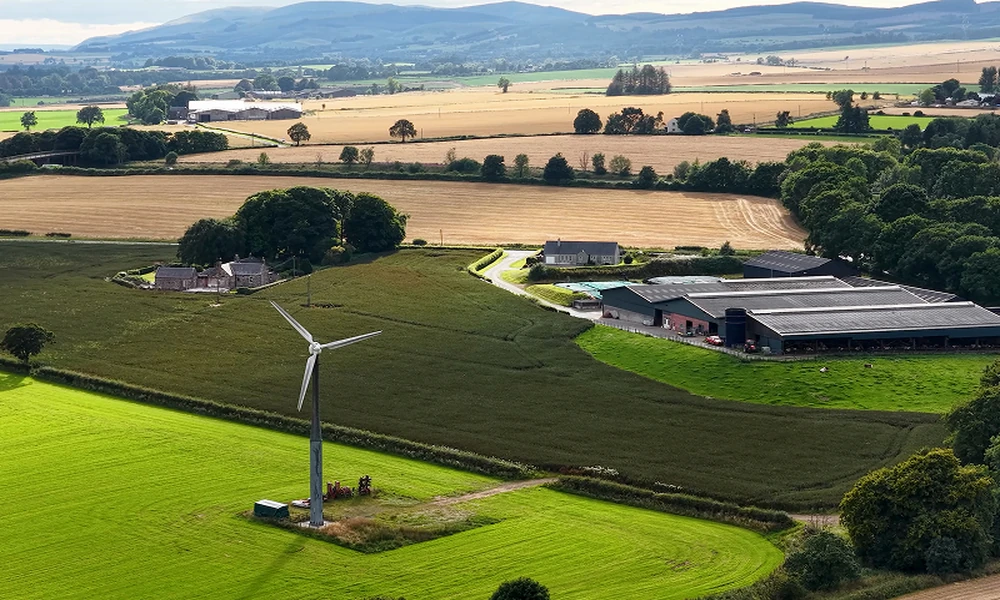
Image Recommendation: A data centre campus adjacent to a solar farm or wind turbines, aerial view showing the physical proximity.
Two data centres can both describe themselves as running on renewable energy and mean genuinely different things by it. One purchases certificates that offset its grid consumption on paper, while physically drawing power from whatever mix the local grid actually generates. The other is sited and supplied specifically to draw from renewable generation nearby, meaning the electricity actually flowing into the building is genuinely different from what it would have been otherwise. Both claims are technically accurate. They describe two very different realities.
Two Paths to the Same Public Claim
Laid out side by side, the distinction between the two approaches becomes considerably clearer than it appears in a sustainability summary:
| Renewable Energy Credits | Direct/Co-Located Renewable Power | |
| What’s actually happening | Facility draws standard grid power; credits are purchased separately to offset it on paper | Facility is sited and supplied to draw specifically from nearby renewable generation |
| Physical power source | Unchanged, whatever the local grid mix happens to be | Genuinely shifted toward the renewable source itself |
| Dependence on location | Largely irrelevant; credits can be purchased regardless of where the facility sits | Central, the facility has to be sited where that access is actually feasible |
Neither approach is inherently invalid; credit-based offsetting remains a legitimate and widely used mechanism. The distinction matters because the two paths lead to genuinely different operational realities, and increasingly, buyers evaluating a facility’s environmental claims want to know which one they’re actually looking at.
Why the Credit-Based Approach Became the Industry Default
Purchasing renewable energy credits is considerably simpler to execute than physically siting a facility near a specific power source, since it decouples the sustainability claim from the practical constraints of geography and grid infrastructure entirely. A facility can be built wherever connectivity, land, and cooling requirements make the most operational sense, and the renewable claim gets addressed separately through a credit purchase. This flexibility explains much of the approach’s popularity, even as scrutiny of what the claim actually represents continues to grow.
Why Scrutiny of This Distinction Is Increasing
As data centre energy consumption continues rising alongside demand for AI and cloud infrastructure, buyers and regulators alike are asking more pointed questions about what a sustainability claim actually represents operationally. The green data centre market is increasingly differentiating between facilities that have made this direct connection and those relying primarily on credit purchases, since the two carry meaningfully different implications for genuine emissions impact.
Why Direct Access Changes What the Claim Actually Represents
A facility built with direct or co-located access to renewable generation isn’t simply offsetting its consumption after the fact; its actual electricity draw is tied to that generation source from the outset. This requires a fundamentally different planning approach: siting decisions have to account for proximity to viable renewable capacity, not just connectivity and land cost, and power agreements have to be structured around that specific supply rather than a generic grid connection paired with a separate certificate purchase.
Why This Distinction Should Factor Into Site Selection Itself
Building this kind of direct connection into a facility from the earliest planning stages, rather than retrofitting a sustainability strategy onto an already-sited building, tends to produce a considerably more genuine outcome. Comprehensive data centre services that account for this from the outset treat power sourcing as a core input into where and how a facility gets built, not a separate workstream addressed after construction decisions have already been made.
Why This Matters Beyond a Single Facility’s Reporting
As hyperscale demand continues to grow, the aggregate choice between credit-based offsetting and direct renewable access across the industry will meaningfully shape how much genuine additional renewable capacity actually gets built, versus how much existing renewable generation simply gets reallocated on paper without any new capacity being added. This distinction matters considerably more at industry scale than it does for any single facility’s individual sustainability report.
A green energy claim is only as meaningful as the mechanism behind it. Understanding which of the two paths a given facility has actually taken, credits purchased after the fact, or power access built directly into its planning, is increasingly the more useful question to ask than simply whether a sustainability claim exists at all.
Looking to understand how direct power access could factor into a planned facility? Contact K2 Strategic to discuss site and power planning together.